

Get the Height Right and Everything Else Follows
Gaiters solve one problem and quietly create another. Here is how to choose a sock that works underneath them, so you finish the day with dry, comfortable feet instead of a hot spot above the ankle.
Quick Answer: Wear a sock that comes higher than the top of your boot and higher than where the gaiter grips your leg, in a fibre that moves moisture. A three-quarter length mohair sock is the safe answer for most walkers.
What Gaiters Change About Your Feet
Gaiters do a good job. They keep mud, grit, heather and standing water out of the top of your boot, and on wet autumn ground they are the difference between a nuisance and a miserable day.
But they also do three things people do not think about.
- They trap heat. A gaiter is another layer around your lower leg and ankle, usually waterproof. Warm, moist air that used to escape now has nowhere to go.
- They add pressure. The strap under the boot, the hook at the front, the cuff round the calf. All of that presses in, and whatever is between it and your skin matters.
- They change where rubbing happens. The problem area moves from your ankle bone up to the top of the boot and the line where the gaiter sits.
A gaiter does not stop sweat. It makes the sock's job harder.
Height: The One That Catches People Out

This is the mistake we hear about most.
Someone puts an ankle sock on, pulls a gaiter over the top, walks five miles, and finishes with a raw patch just above the boot line. The sock ended below the problem, so the boot cuff and gaiter were working directly against skin.
The rule is simple.
Your sock should finish above the top of your boot and above the point where the gaiter grips your leg.
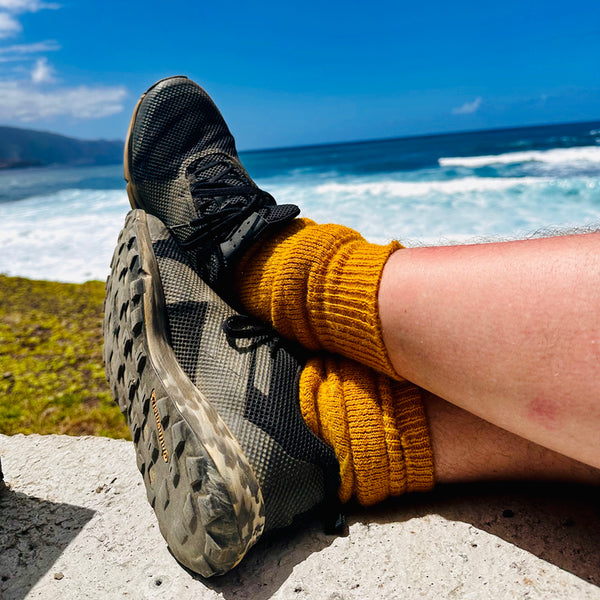
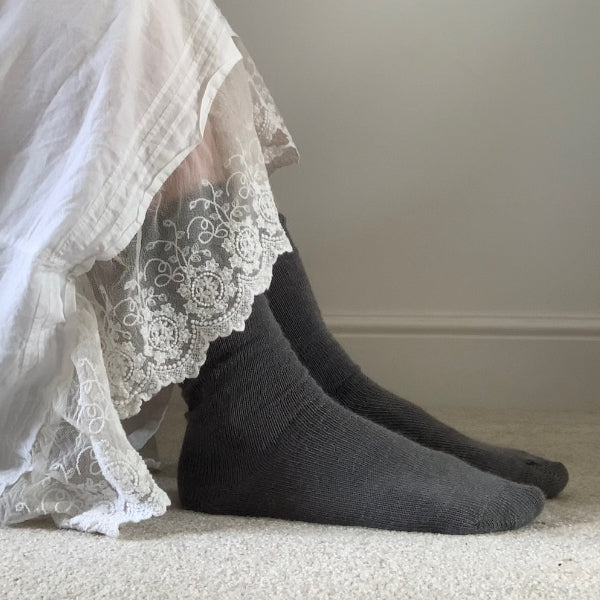
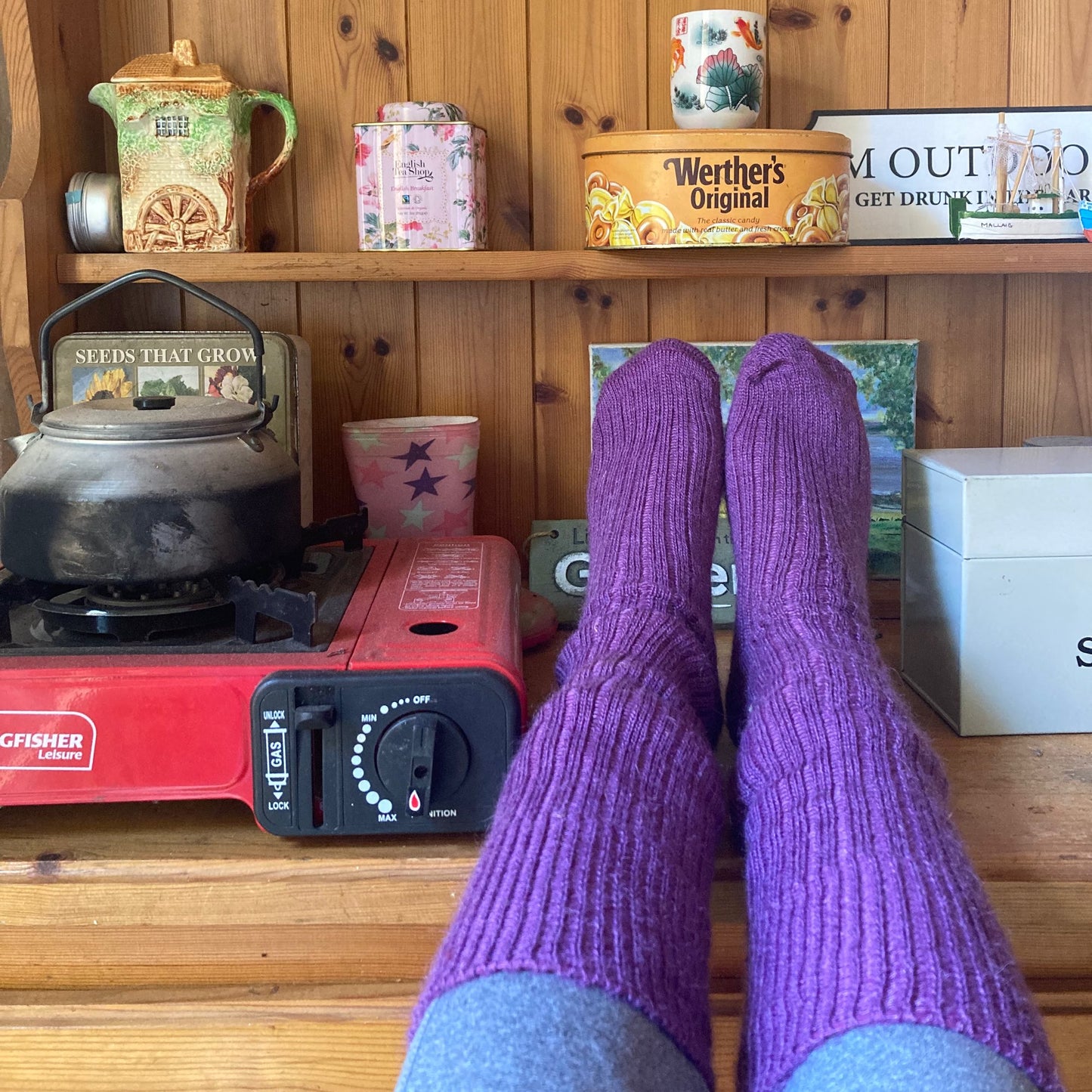
For most walking boots and a standard mid-calf gaiter, that means a three-quarter length or longer sock. Our Yorkshire is a three-quarter length sock with a ribbed top, and it is the one we reach for when gaiters are going on.
If your gaiters are tall, or you are walking in deep snow or heather where they come high up the calf, go longer again. The Northumberland is a full-length ribbed sock with a turnover top, which gives you the option of folding it down to exactly the height you want.
A sock that stops just short of the trouble is worse than no sock at all.
Thickness: Warmer Is Not Always Better
The instinct in autumn and winter is to reach for the thickest sock in the drawer. Under a gaiter, that is not automatically right.
Two things to weigh up.
Boot volume. Your boots were fitted with a particular sock. A much thicker sock takes up room, tightens the fit and presses the foot against the boot. That causes hot spots, and on a long descent it causes bruised toenails.
Heat build-up. With a gaiter over the top, a very thick sock can leave your foot genuinely too warm, which means more sweat, which means a damp sock and more friction. You end up with the problem you were trying to avoid.
What you actually want is a sock with loft rather than bulk - one that traps air and cushions without filling the boot. That is precisely what mohair does. The fibre is springy, it holds its shape under pressure, and it keeps its insulating structure even when it is damp.
Our Derbyshire is a good example. Thick loop pile construction, genuinely warm, but it is an ankle length sock, so pair it with a gaiter only if your boot cuff is low.
Fibre: Why Cotton and Synthetics Struggle Under a Gaiter
Under a gaiter, the fibre matters more than it does in an open shoe, because the moisture has fewer ways out.
- Cotton. Absorbs sweat and holds it against the skin. Wet cotton loses its shape, bunches, and rubs. Under a gaiter it never gets a chance to dry. Avoid.
- Synthetics. Move moisture reasonably well, but they hold odour and they flatten with use. In a warm, enclosed environment, the smell after two days is noticeable.
- Mohair. Wicks moisture away from the skin, stays warm when damp, and springs back rather than packing down flat. It also resists odour, which matters when your foot has spent eight hours inside a sealed boot and gaiter.
Mohair keeps working when it is damp. That is the whole argument for it under a gaiter.
Matching the Sock to the Gaiter
| Gaiter type | Where it sits | What you want |
|---|---|---|
| Low or trail gaiters | Just above the boot cuff | Ankle to three-quarter length. Debris is the main issue, heat less so. |
| Standard walking gaiters | Mid-calf | Three-quarter length minimum. Sock top must clear both boot and gaiter cuff. |
| Tall or winter gaiters | High calf, often over stiffer boots | Full length with a turnover top, so you can set the height yourself. |
| Wellington boots with a gaiter over | Varies | Full length. Wellies trap sweat badly and need all the help they can get. |
Our Picks for Walking in Gaiters
-
Yorkshire £22.95
Three-quarter length, thick cushioned sole, ribbed top that stays up without gripping the leg. The default choice. -
Northumberland £19.96 £29.95
Full length, ribbed, turnover top, cushioned sole. Best with tall gaiters, and you can fold the top to suit. -
Yorkshire - Short from £17.45 £19.95
Ankle length with the same cushioned sole. For low gaiters and low-cut boots only. -
Ayrshire £21.95
Thinner ankle sock with a little Lycra for stretch. The one to choose if your boots are a snug fit and you have no room to spare.
All knitted in Leicester and dyed in Leeds. Buy four or more pairs and UK delivery is free.
Five Things to Check Before You Set Off
- Pull the sock up properly. Smooth it out. A fold under the gaiter cuff will become a blister.
- Check the sock top clears the boot. Stand up, bend your knee. The boot cuff should sit on sock, not skin.
- Fit the gaiter over the sock, not under it. Obvious, but it happens in the dark at a car park.
- Do not over-tighten the calf cuff. If it is leaving a deep mark, it is restricting circulation and it will ache by mile eight.
- Carry a spare pair. If you do go through a bog over the top, a dry sock at lunchtime saves the afternoon.
Frequently Asked Questions
Do I need longer socks just because I am wearing gaiters?
Usually, yes. The gaiter and the boot cuff both press on your lower leg, so the sock needs to be between them and your skin. A three-quarter length is the sensible default.
Will my feet overheat in mohair socks under gaiters?
Mohair regulates temperature rather than simply insulating, and it moves moisture rather than holding it. Most walkers find they are more comfortable in mohair under a gaiter than in a thick synthetic sock, because the sock is not sitting wet against the skin.
Should I wear liner socks with gaiters?
Most people do not need to. A well-fitting mohair sock manages friction and moisture on its own, and a liner adds another layer in a boot that is already enclosed. If you have always used liners and they work for you, carry on.
Can I wear gaiters with wellingtons?
Yes, and plenty of people working outdoors do. Wellies trap sweat more than any other boot, so go for a full-length mohair sock and expect to change it partway through a long day.
My socks keep slipping down under my gaiters. Why?
Usually one of three things: the sock is too short for the boot, the elastication has gone, or the sock is the wrong size. A ribbed top like the one on our Yorkshire holds without digging in, which is what keeps it up over a long day.
How do I wash mohair socks after a muddy day?
Let the mud dry, brush the worst off, then machine wash at 30 degrees. Do not tumble dry. Treated properly they will outlast several pairs of the supermarket alternative.
Get the height right, let the fibre do the rest, and your gaiters can get on with the job they were bought for.
UK-made mohair, knitted in Leicester, dyed in Leeds.
Three-quarter and full-length socks built for gaiter weather.