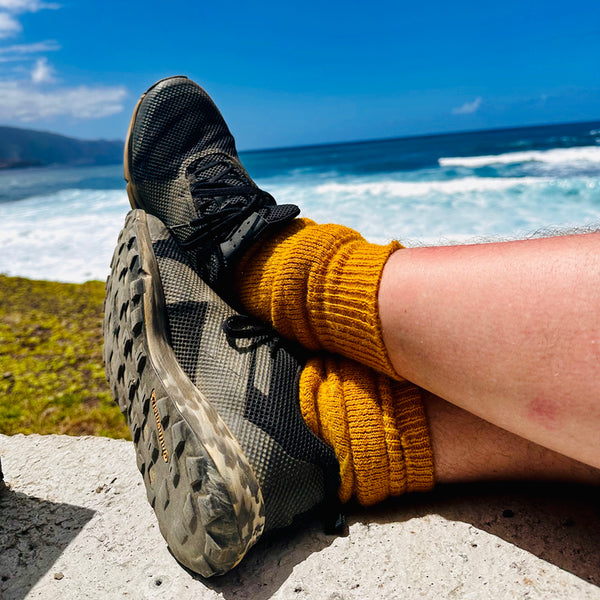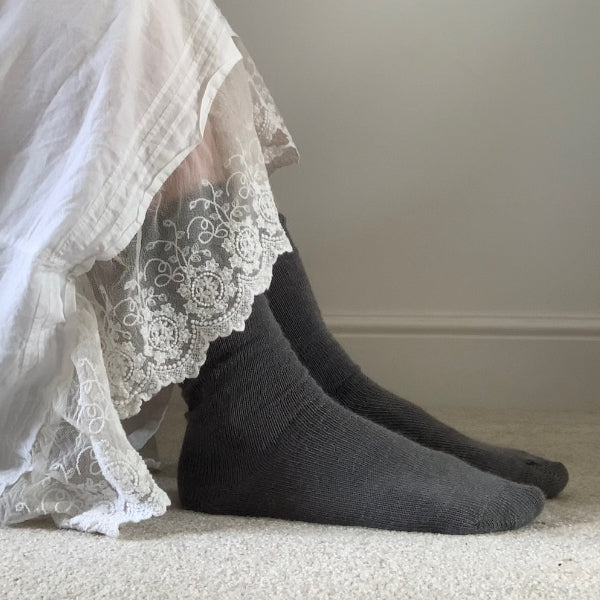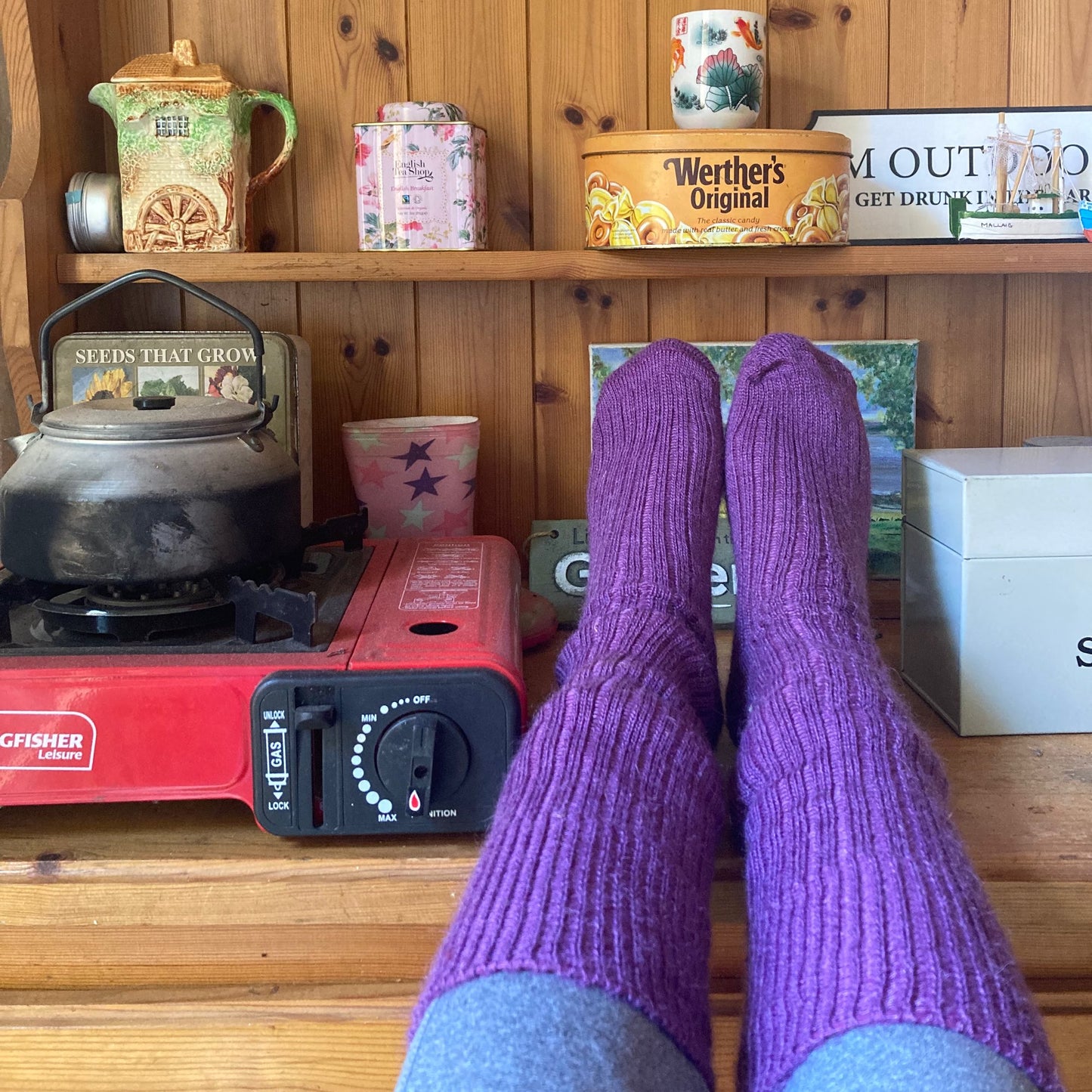


A cold foot on a riverbank is not a weather problem. It is a standing-still problem.Walkers make their own heat. Anglers do not. Here is what that means for the sock you choose.
Ask a walker when their feet get cold and they will say January.
Ask an angler and they will say the first still, damp morning in October when they have been in the same spot for two hours.
It is the same air temperature. The difference is that one of you is moving.
Why Standing Still Is So Much Colder
Three things happen on a riverbank that do not happen on a walk.
- You stop generating heat. Walking, your legs are pumping warm blood to your feet constantly. Standing, that drops away within minutes and your feet get whatever the rest of you can spare.
- Rubber conducts cold, and it does not breathe. A wellington or a wader boot is essentially a cold, sealed box. Whatever heat you have goes into warming the boot, and whatever moisture you produce stays inside it.
- Damp ground pulls heat straight out of you. Standing on wet gravel, mud or in the water itself, you lose heat by conduction far faster than you do through the air.
Add the classic angler's problem - you sweat walking down to the water, then stand still in a damp sock for three hours - and you have a genuinely miserable combination.
🎣 Quick Answer: The sock has to do two jobs at once: move sweat away while you walk in, and hold warmth once you stop. Cotton does neither. A high-mohair sock with a thick pile does both.
Why Mohair Suits This Better Than Cotton
Cotton is the worst possible choice inside a welly. It absorbs moisture, holds onto it, and then sits cold against your skin for the rest of the day.
Mohair behaves differently in three ways that matter here:
- It is a warm fibre. Mohair is well known for warmth and comfort - that is the whole reason it ends up in blankets and coats.
- It breathes and moves moisture, so the sweat from your walk in is not still sitting there at lunchtime.
- It holds odour far less than wool or synthetics. Mohair is a much smoother fibre, so there are fewer places for the bacteria that cause the smell to settle. That matters when a pair lives in a wader bag between trips.
And the one every angler cares about eventually: mohair is genuinely hard wearing. It is used in aircraft seat fabric for exactly that reason, and it is the thing our customers write to us about most often.
💡 Did You Know? We add a small amount of nylon to every sock. Mohair has huge strength and abrasion resistance but very little stretch, so the nylon is what makes the sock hold its shape and stay up all day rather than concertina round your ankle inside a boot.
Which Capricorn Sock for the Riverbank
Two of our socks suit fishing, and the choice comes down to one question: how much of the warmth do you want around your foot, and how much up your leg?
| Sock | Composition | Length | Price | Best for |
|---|---|---|---|---|
| Derbyshire | 70% mohair, 30% nylon | Ankle | £25.95 | The warmest option. Tall wellies and neoprene waders |
| Yorkshire | 65% mohair, 35% nylon | ¾ length | £22.95 | Shorter wellies and wader boots, and anyone who wants the calf covered |
Derbyshire: the warm one
This is the sock to reach for when it is properly cold and you know you will not be moving much.
The difference is the construction. Most thick socks put their cushioning underfoot and leave the rest as a flat knit. The Derbyshire is a thick loop pile that runs top to toe - closer in feel to terry towelling than to an ordinary sock - so the warmth wraps the whole foot rather than just sitting under the sole.
At 70% mohair it is also one of the highest mohair contents we make. It is ankle length, so it works best where the boot already covers your leg: a tall wellington, or inside the neoprene bootie of a pair of chest waders.
Fair warning, it is genuinely thick. Check you have room in the boot before you size up.
Yorkshire: the ¾ length one
Our thick boot sock, at ¾ length, with a thick cushioned sole and a wide ribbed band at the top that holds it up without gripping your leg.
The ribbed leg is what stops it sliding down inside a welly - which, if you have ever had to take a boot off in the middle of a river to sort out a bunched sock, you will understand the value of. There is padding around the back of the heel as well as underfoot, which matters if you are standing on gravel for hours.
Choose this one over the Derbyshire if your wellies are on the shorter side, if you are in wader boots rather than full wellingtons, or if you simply like a bit of sock up the calf.
Customer Feedback: Two reviews on the Yorkshire that are worth repeating. Gill, buying for her husband: "He's a fisherman so good welly socks are vital!" And Julian, who spends his working day in wellies at a brewery: "keep my feet comfy and dry quickly too."
Three Things That Are Not the Sock
We would rather sell you the right thing once than the wrong thing twice.
- A boot that is too tight will make your feet cold no matter what. If a thicker sock means you have to force your foot in, you have cut off the circulation and you have made the problem worse. Size up the boot, not down the sock.
- Two thin pairs is usually worse than one good pair. Layering socks inside a rubber boot creates friction and takes up the air space that actually does the insulating.
- A spare pair in the bag beats any sock in the world. Walk in, swap into dry socks before you settle in to fish. It takes two minutes and it changes the whole day.

Looking After Them
Machine washable on a warm wool wash - 40°C - without worrying about excessive shrinkage. Do not tumble dry.
If they have been in waders all day, get them out of the bag and dry them properly rather than leaving them balled up until next weekend. Mohair resists odour well, but nothing dries in a rolled-up heap.
Sizes
Both socks come in all three sizes:
- Small - UK 4-7
- Medium - UK 8-10
- Large - UK 11-13
Warm feet, dry feet, and a sock that will still be going next season. Knitted in the UK, as they always have been.
Free UK delivery on four pairs or more. Buy a spare pair for the bag while you are here - see the full range.
Frequently Asked Questions
What socks should I wear with wellies for fishing?
A high-mohair sock with a thick pile and a cushioned sole. Our Derbyshire is the warmest, with loop pile running top to toe, and suits a tall wellington or a neoprene wader bootie. The ¾ length Yorkshire suits shorter wellies and wader boots, and covers the calf.
Why do my feet get cold fishing but not walking?
Because walking generates heat and standing still does not. Add a rubber boot that conducts cold and does not breathe, plus damp ground pulling heat out by conduction, and your feet cool far faster than they would on the move.
Are two pairs of socks warmer than one?
Usually not, inside a rubber boot. Two pairs create friction and squeeze out the trapped air that does the insulating. One good thick pair, in a boot with room to spare, will be warmer.
What is loop pile, and why does it matter?
Loop pile is a dense pile of yarn loops rather than a flat knit, closer in feel to terry towelling. Those loops trap air, and trapped air is what keeps you warm. On the Derbyshire the pile runs top to toe rather than just underfoot, so the whole foot is insulated.
Can you machine wash mohair socks?
Yes. A warm wool wash at 40°C is fine, or hand wash. Do not tumble dry.
Do mohair socks smell after a day in waders?
Far less than wool or synthetics. Mohair is a much smoother fibre, so there are fewer places for odour-causing bacteria to settle.
What size should I order?
Small is UK 4-7, Medium is UK 8-10, Large is UK 11-13. If you are between sizes and wearing them in wellies, size up rather than down.